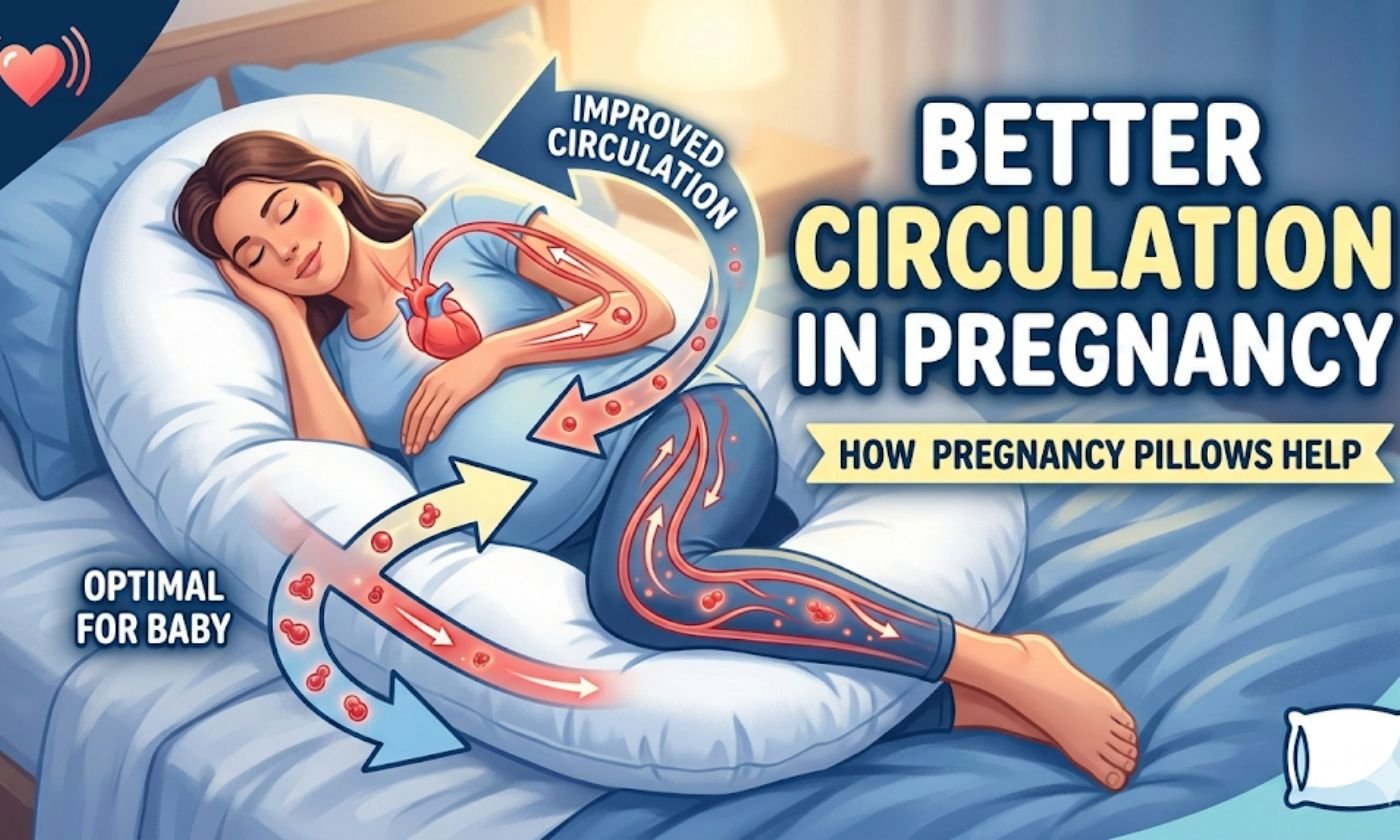
How Pregnancy Pillows Improve Blood Circulation During Pregnancy
Many women who are pregnant experience poor sleep, body aches, and circulatory problems. One easy yet extremely effective remedy is to use pregnancy pillows. Specially designed to support the body’s changes during pregnancy. These pillows don’t just increase comfort but also improve blood flow, which is vital for both the mother and the baby.
Why Blood Circulation Is Important During Pregnancy
During pregnancy, your body has to work hard to increase blood flow and provide nutrition and oxygen to the growing baby. Regular blood circulation can help reduce swelling, decrease leg cramps, and lower the risk of complications such as varicose veins or dizziness. But as the uterus expands, it puts pressure on the major blood vessels, particularly when lying back, which could decrease blood flow.
Doctors usually suggest sleeping on your left side during pregnancy because it increases blood flow to the placenta and vital organs. A pregnancy pillow helps maintain this position all night, ensuring good circulation.
What Is a Pregnancy Pillow?
Pregnancy pillows are specifically designed cushions that can support various areas affected by pregnancy, such as the back, belly, hips, and legs. Unlike traditional pillows, pregnancy pillows are designed to accommodate the body’s changing curves and provide total body support.
Common types of pregnancy pillows include:
-
U-shaped pregnancy pillows
-
C-shaped pregnancy pillows
-
Wedge pregnancy pillows
-
Full-body pregnancy pillows
The pillows can help pregnant women maintain an ideal side-sleeping posture, which is suggested to improve blood circulation.
How Pregnancy Pillows Support Better Blood Circulation
Pregnancy pillows are specifically designed to help keep your body properly aligned while you sleep. If the body is properly aligned, blood can flow more freely through vessels and veins. By supporting the abdomen and keeping the spine and hips in a neutral posture, pregnancy pillows reduce pressure on major blood vessels, such as the inferior vena cava.
When the pressure on these vessels decreases and blood circulation increases, oxygen-rich blood can reach the infant and vital organs with ease, thereby preventing swelling and tingling in the legs that can occur due to restricted blood flow.
Helps Maintain the Recommended Side-Sleeping Position
Medical professionals advise that pregnant women sleep on their left sides to increase circulation to both the kidneys and the placenta. Many women, however, unconsciously lay on their backs when asleep.
A pregnancy pillow can help maintain the position of sleeping on your side, by giving support to the belly and back. This helps prevent the back from turning on the back, and also ensures healthy blood flow throughout night.
Reduces Swelling in Legs and Feet
Swelling of the ankles, legs, or feet can be a frequent problem during pregnancy due to increased fluid retention and pressure on blood vessels. Pregnancy pillows support the legs and allow them to be slightly elevated, which helps reduce fluid accumulation and increase circulation in the lower body.
Improved blood flow can reduce swelling and discomfort, making pregnant mothers feel more at ease and relaxed.
Supports the Spine and Reduces Pressure Points
Poor sleep posture can compress blood vessels, restricting circulation. Pregnancy pillows help align the spine and support the hips and knees, helping prevent unnecessary strain on the body.
By reducing pressure points, these pillows allow blood to flow freely, which reduces numbness, muscle cramps, and pain throughout the body.
Improves Overall Sleep Quality
A good night’s sleep is vital during pregnancy to support both maternal health and fetal development. If circulation improves and pressure on the body is reduced, sleep is more restful and relaxing.
Pregnancy pillows help moms sleep more deeply and longer, which improves overall health and energy levels throughout pregnancy.
Tips for Using a Pregnancy Pillow for Better Circulation
To maximize the benefits of a pregnancy pillow, consider these tips:
-
Sleep on your left side whenever possible
-
Place the pillow between your knees to align your hips
-
Use the pillow to support your belly and back
-
Slightly elevate your legs if you experience swelling
-
Choose a pillow shape that suits your sleeping style
Using a pregnancy pillow correctly can significantly improve comfort and blood circulation during pregnancy.
Conclusion
Pregnancy pillows are more than just comfort items. They play a crucial role in maintaining blood circulation during pregnancy. Promoting the recommended side-sleeping position, reducing pressure on blood vessels, and using your body’s naturally aligned pillows can improve sleep quality and overall health.
For expecting mothers looking for an easy way to ease discomfort and improve their overall health, a pregnancy pillow could be an excellent investment.
FAQs About Pregnancy Pillows and Blood Circulation
1. Do pregnancy pillows really improve blood circulation?
Yes, pregnancy pillows help maintain the recommended side-sleeping position and reduce pressure on major blood vessels, which improves blood circulation for both the mother and baby.
2. Which pregnancy pillow is best for circulation?
U-shaped and C-shaped pregnancy pillows are often considered the best because they provide full-body support and help maintain proper sleeping posture.
3. When should I start using a pregnancy pillow?
Most women start using a pregnancy pillow during the second trimester when the belly begins to grow and sleeping comfortably becomes more difficult.
4. Can pregnancy pillows reduce swelling in the legs?
Yes, pregnancy pillows can help elevate the legs slightly, which improves circulation and reduces swelling in the feet and ankles.
5. Is sleeping on the back dangerous during pregnancy?
Sleeping on the back, especially in the later stages of pregnancy, can put pressure on major blood vessels and reduce blood flow. This is why side sleeping is recommended.
6. Can a pregnancy pillow help with back pain?
Yes, pregnancy pillows support the back, belly, and hips, helping maintain proper alignment and reducing back pain during pregnancy.