Top 5 Pregnancy Pillow Features to Look For Before Buying
Pregnancy is beautiful, but it also comes with sleepless nights, body aches, and constant tossing and turning. A good pregnancy pillow can change everything by giving full body support and helping you get the rest you need through every trimester. The trick is knowing which pregnancy pillow features actually make a difference, because not all pillows on the market are built the same.
This guide walks you through the five most important pregnancy pillow features, plus a quick buying checklist so you can pick the right pillow for your body, your bed, and your budget.
Why a Pregnancy Pillow Matters
During pregnancy, your regular pillow simply does not give the support you need. Doctors recommend side sleeping, especially on the left side, to improve blood circulation between mother and baby. A proper pregnancy pillow supports several body parts at once:
- Back
- Hips
- Belly
- Knees
- Neck and shoulders
Beyond aligning the spine and reducing pressure points, it helps prevent common pregnancy discomforts like lower back pain, hip strain, and morning stiffness. The right pillow makes nights easier and mornings far less sore.
1. Full Body Support Design
The first pregnancy pillow feature to consider is the shape, because it determines how much of your body actually gets supported.
Choose the Right Shape for Maximum Comfort
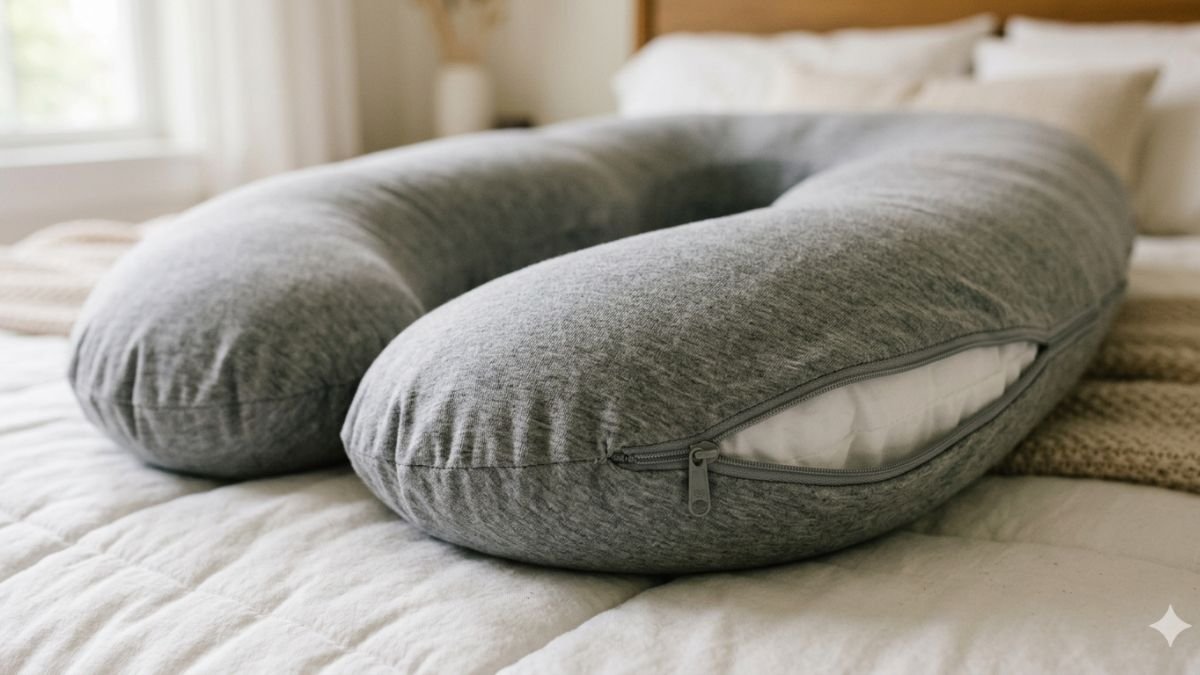
- U-shaped pregnancy pillow: Supports both sides of the body at the same time. Ideal if you turn over during sleep or want full body coverage in one piece.
- C-shaped pregnancy pillow: Compact one-sided support for the belly and back. Good for smaller beds and one-side sleepers.
- J-shaped pregnancy pillow: Space-saving design that supports back and belly without taking over the whole bed.
- Wedge pillow: Small triangular pillow for targeted support under the belly or behind the lower back. Useful in early pregnancy or as extra support.
Why Shape Matters
If you share your bed, a C-shape or J-shape may be more practical than a full U-shape. If you sleep alone or have a queen-size bed, a U-shape gives the most complete spinal alignment. The wrong shape for your situation creates more problems than it solves, no matter how well made the pillow is.
2. Firmness and Filling Material
The filling decides how comfortable the pillow feels and how long the support actually lasts. This is one of the most overlooked pregnancy pillow features, and it makes the biggest difference between a pillow that helps for the full pregnancy and one that flattens within weeks.
Common Filling Options
- Memory foam: Contours to your body and gives excellent support, but tends to trap heat. Best if you do not sleep hot.
- Microfiber: The most popular practical choice. Holds shape well, stays breathable, and feels soft enough for daily comfort.
- Polyester fiberfill: Lightweight and cheap, but flattens quickly. The cheapest pillows usually use this.
- Microbeads: Flexible but lose shape over time and can feel uneven.
- Organic cotton fill: Eco-friendly and breathable but generally less supportive for full body needs.
The Right Firmness Level
A pillow that is too soft will not actually support you, and one that is too firm feels uncomfortable. Most pregnant women find that medium-firm fillings, especially microfiber, give the best balance between comfort and lasting support.
3. Breathable and Hypoallergenic Fabric
Pregnancy raises body temperature, which means a non-breathable cover will leave you sweating at 3 in the morning. The cover fabric is far more important than most people realise, especially in Indian weather.
Look for These Breathable Materials
- Cotton
- Bamboo fabric
- Jersey knit
- Velvet (soft and skin-friendly)
- Cooling blends
Hypoallergenic Benefits
Pick a pillow with a hypoallergenic cover to prevent skin irritation and avoid harsh chemicals. This matters even more during pregnancy when skin tends to become more sensitive.
Removable and Washable Covers
This is non-negotiable. Pregnancy pillows are used every night and need regular washing. A zipper closure, machine washable cover is essential for hygiene and convenience. A pillow without one becomes a real problem within the first few weeks.
4. Size and Adjustability
Size is the pregnancy pillow feature most often ignored at the time of purchase, then regretted the moment the pillow arrives.
Make Sure It Fits Your Bed and Body
Before buying, consider:
- Your bed size (single, double, queen, or king)
- Your height (shorter women may need smaller pillows)
- Whether you share the bed with a partner
- How much space you actually have to spare
Adjustable Designs
Some pregnancy pillows have removable sections or zippered fillings that let you customise the firmness or size as your pregnancy progresses. This adjustability is helpful if you find the standard size overwhelming or want to fine-tune the support.
Compact vs Full Length
If your space is limited, a smaller compact pillow can still give adequate support without taking over the bed. Do not buy bigger than you need just because the product photos look impressive.
5. Durability and Long-Term Use
A good pregnancy pillow should last well beyond pregnancy. The fifth important pregnancy pillow feature is durability, because a pillow that flattens by month seven is a waste of money.
Invest in Quality for Postpartum Use
Most mothers continue using their pregnancy pillow for:
- Postpartum recovery
- Breastfeeding support
- Side-lying night feeds
- Back support while sitting up in bed
- Baby support during tummy time
- Daytime resting and lounging
Stitching and Material Quality
Check the seams, zippers, and stitching closely. Cheap construction shows up as bulging corners, broken zippers, or fraying within a couple of months. A well-made pillow holds its shape and stitching for the full pregnancy and well into postpartum use.
Warranty and Brand Reputation
Buy from a reputable brand with clear customer reviews, a working customer service line, and a return policy that means something. A good warranty also tells you the brand stands behind its product.
Additional Features Worth Considering
Some premium pregnancy pillows include extra comfort features that may justify a higher price:
- Cooling gel inserts for hot sleepers
- Organic certification for chemical-free filling and fabric
- Zippered adjustable filling to customise firmness
- Travel-friendly compact versions for short trips
- Spare covers so one can be washed while the other stays in use
How to Choose the Right Pregnancy Pillow for You
Quick Buying Checklist
Before buying, ask yourself these five questions:
- Do I switch sides often during sleep, or stay on one side?
- Do I need full body support or just targeted belly support?
- How much bed space do I actually have?
- Do I prefer firm support or plush comfort?
- Is the cover washable, breathable, and skin-friendly?
Answering these honestly will narrow your options and prevent the most common buying mistakes.
Common Mistakes to Avoid
- Buying based on price alone. Cheap pillows usually use poor filling that flattens fast.
- Ignoring fabric quality. A non-breathable cover ruins sleep no matter how supportive the pillow is.
- Buying a size too large for your bed. Measure first to avoid crowding your partner.
- Skipping customer reviews. Real buyer feedback reveals durability and shape issues that product descriptions hide.
- Choosing a pillow that is too soft. Soft feels nice on day one but stops supporting you within weeks.
Why the PlayTots U-Shaped Pillow Has All the Right Features
The PlayTots U-Shaped Pregnancy Pillow ticks every important pregnancy pillow feature on the checklist:
- Full body U-shape that supports both sides at once
- Hypoallergenic microfiber filling that holds shape over months of use
- Soft velvet cover that feels gentle and stays breathable
- Removable, machine washable cover for daily hygiene
- Generous size that fits standard Indian double and queen-size beds
- Strong stitching and durable seams built to last well into postpartum use
- Available in four colours – blue, grey, green, and purple
- Free shipping across India and a 7-day easy return policy
Final Thoughts
The right pregnancy pillow features can change how you sleep through every trimester. By focusing on support design, firmness, fabric quality, size, and durability, you can find a pillow that genuinely supports you through pregnancy and continues to be useful long after delivery. Invest in comfort so you and your baby can both sleep well.
Frequently Asked Questions
When should I start using a pregnancy pillow?
Most women start using one during the second trimester, around 12 to 16 weeks, when the belly begins to grow and sleep gets less comfortable. You can also start earlier if you experience back pain or trouble sleeping on your side.
Is a pregnancy pillow really necessary?
It is not medically required, but most pregnant women find it significantly improves comfort, reduces body pain, and supports better sleep quality through every trimester.
Can I use a pregnancy pillow after delivery?
Yes. Most mothers continue using their pregnancy pillow for breastfeeding, postpartum recovery, and as a regular body pillow for several months after the baby arrives.
Which pregnancy pillow shape is best for back pain?
U-shaped and C-shaped pillows typically provide the best back support because they cushion both the lower back and the belly at the same time, keeping the spine properly aligned.
Are pregnancy pillows safe to use?
Yes, when used correctly. They are designed to support recommended side-sleeping positions and reduce pressure on the body. Always pair them with a hypoallergenic cover for sensitive skin.
What features matter most in a pregnancy pillow?
The five most important features are full body support shape, firm but comfortable filling, breathable hypoallergenic fabric, the right size for your bed, and durable stitching that lasts beyond pregnancy.
Shop the PlayTots U-Shaped Pregnancy Pillow Online
Looking for a pregnancy pillow with all the right features? Browse our full range of U-shaped pregnancy pillows online in India at PlayTots India. Free shipping, easy returns, and the kind of support that lasts through every trimester and beyond.