Pregnancy Pillow vs Regular Pillows: Which One Actually Works for Better Sleep?
The pregnancy pillow vs regular pillows debate comes up for almost every expecting mother when sleep starts becoming difficult. As body weight increases, hormones shift, and a growing belly makes finding a comfortable position feel impossible, choosing the right sleep support can drastically improve sleep quality and reduce daily discomfort.
This guide breaks down the real differences in the pregnancy pillow vs regular pillows comparison, who each one suits, and how to know when it is time to switch to a proper maternity pillow.
Why Proper Sleep Support Matters During Pregnancy
Good sleep during pregnancy is not just about comfort. It directly supports the health of both mother and baby. Proper night-time support eases pressure on the back, hips, and joints, helps you maintain the side-sleeping position doctors recommend, and improves blood circulation to the placenta. When sleep is poor for weeks at a stretch, energy drops, mood worsens, and the entire pregnancy feels harder than it needs to.
The right pillow makes a bigger difference here than most people expect. Comparing pregnancy pillows to regular pillows is therefore not just a price discussion. It is a sleep quality decision.
What Is a Pregnancy Pillow?
A pregnancy pillow is a specially designed support pillow built for the changing body during pregnancy. It cradles the belly, back, hips, and legs at the same time, all in one connected piece. These pillows come in several shapes:
- U-shaped pillow: Full body support on both sides
- C-shaped pillow: One-sided support, more compact
- J-shaped pillow: Space-saving with leg support
- Wedge pillow: Small, targeted support for the belly or back
- Full length body pillow: Long straight pillow for side sleepers
The ergonomic design helps the pillow stay in place all night, which dramatically reduces tossing, turning, and the need to readjust pillows during sleep.
The Problem with Regular Pillows During Pregnancy
Regular pillows are the standard cushions already in most homes. Many pregnant women start by stacking two or three regular pillows around the body to support the belly, back, and knees. This works for a few days, sometimes a few weeks. Then it stops working.
Regular pillows shift during sleep. By 2 in the morning, the pillow that was behind your back is on the floor. The one under your belly has moved to the wrong place. The one between your knees is somewhere near your feet. You wake up sore and end up rebuilding the whole setup in the dark.
This is not a personal failure. Regular pillows are simply not designed for the shape of a pregnant body. They are built to support your head, not your belly, hips, and back at the same time.
Pregnancy Pillow vs Regular Pillows: The Main Differences
Comfort and Stability
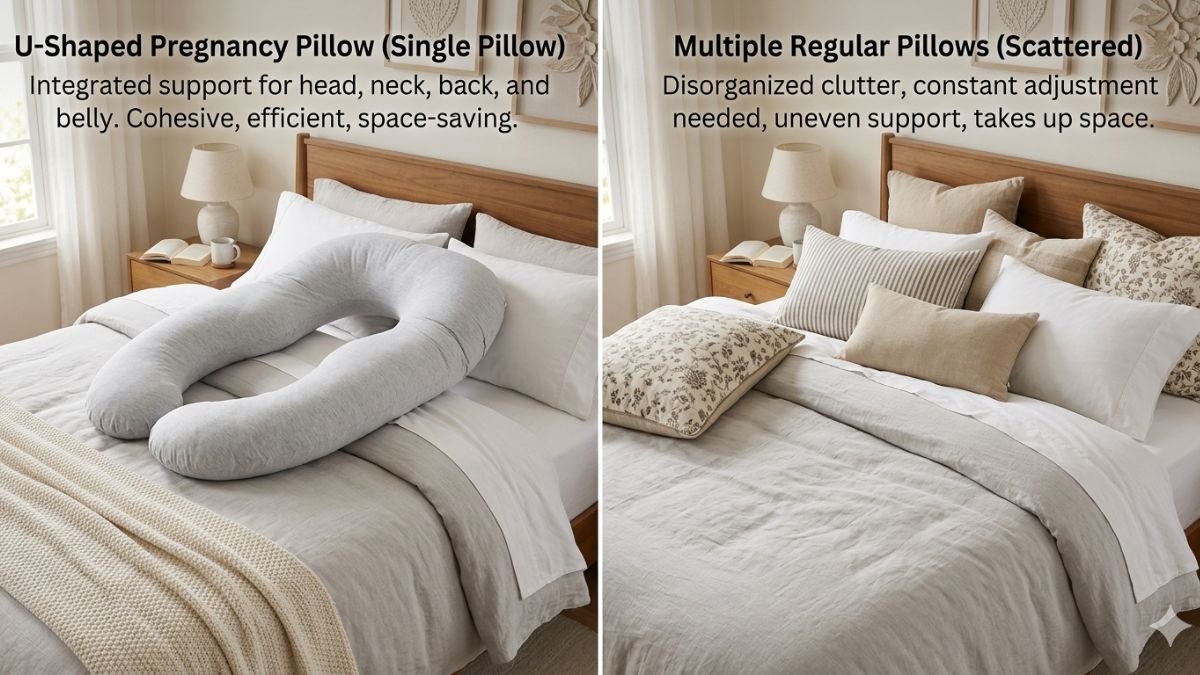
A pregnancy pillow gives consistent, wrap-around support because it is shaped specifically for a pregnant body. The connected design means it stays in position even when you turn over. Regular pillows offer only temporary relief and slip out of place during sleep, which interrupts your sleep cycle and forces you to wake up multiple times to fix the setup.
Cost and Budget
Regular pillows are already in your home and cost nothing extra. A good pregnancy pillow is a separate investment, usually between ₹1,500 and ₹3,500 in India. However, most mothers say the investment is worth every rupee because better rest directly supports mood, energy, pain management, and the ability to function during the day. The cost spread across several months of nightly use is small.
Bed Space
U-shaped pregnancy pillows are larger and take up more room than regular pillows. They need a queen or king-size bed to fit comfortably without crowding your partner. Regular pillows are smaller and easier to move, which might appeal to those with smaller beds, though they give up full body support in exchange.
Long-Term Use
Regular pillows go back to head-pillow duty after pregnancy. A good pregnancy pillow continues to be useful for breastfeeding, postpartum recovery, side-lying night feeds, and lounging for several months after delivery. This makes the pregnancy pillow far more cost-effective when you spread the value across pregnancy and the postpartum period.
Sleep Quality and Health Benefits
A pregnancy pillow supports doctor-recommended side sleeping, prevents back rolling, improves blood circulation, and reduces hip and back pain. Regular pillows can offer some support in early pregnancy but cannot match these benefits as the bump grows. The difference shows up most clearly in how rested you feel in the morning.
Pregnancy Pillow vs Regular Pillows: Quick Comparison Table
| Feature | Pregnancy Pillow | Regular Pillows |
|---|---|---|
| Body Coverage | Full body, head to feet | Head only |
| Stays in Place | Yes, holds shape all night | No, shifts and slides |
| Side Sleeping Support | Designed for it | Limited |
| Back Pain Relief | Strong | Weak |
| Belly Support | Built-in | Needs an extra pillow |
| Bed Space | Takes more space | Compact |
| Cost | One-time investment | Already owned |
| Use After Delivery | Yes, for nursing and recovery | Limited |
When Should You Upgrade from Regular Pillows?
The second and third trimesters are when the pregnancy pillow vs regular pillows debate has a clear winner. As the belly grows and pelvic pressure increases, women who experience hip pain, lower back pain, or trouble staying on their side need dedicated support. Regular pillows might be enough during the first few weeks of pregnancy, but rarely beyond that.
Signs it is time to upgrade:
- You wake up with lower back pain every morning
- Your hips ache during the night
- You keep waking up on your back
- You are rebuilding pillows in the dark every night
- Rolling over has become a major effort
- You sleep eight hours but still feel tired
If two or more of these apply to you, a pregnancy pillow is no longer optional.
Why the PlayTots U-Shaped Pillow Wins the Pregnancy Pillow vs Regular Pillows Debate
The PlayTots U-Shaped Pregnancy Pillow is built to do everything regular pillows cannot. It supports the head, neck, back, belly, hips, and legs at the same time, all in one connected piece. The hypoallergenic microfiber filling holds shape over months of use. The soft velvet cover stays cool through Indian nights. The removable, machine washable cover keeps daily hygiene simple.
It fits standard Indian double and queen-size beds without crowding your partner. Available in four colours – blue, grey, green, and purple. Free shipping across India and a 7-day easy return policy if it does not feel right for you.
Final Thoughts
The pregnancy pillow vs regular pillows comparison comes down to one question: how disrupted is your sleep right now? Regular pillows can manage mild early-pregnancy discomfort, but they shift, slide, and stop working as the bump grows. A proper pregnancy pillow stays in place, supports your full body, and continues to be useful long after delivery. For most pregnant women past the first trimester, the answer is straightforward. Better sleep makes everything easier, and the right pillow is the simplest way to get there.
Frequently Asked Questions
Are pregnancy pillows really necessary?
They are not medically required, but most pregnant women find them very helpful. They reduce back pain, hip pain, and belly strain in ways regular pillows simply cannot. If you struggle to get comfortable at night, a pregnancy pillow makes a real difference.
Can regular pillows be used instead of a pregnancy pillow?
Yes, for mild discomfort, especially in the first trimester. Placing one under the belly and one between the knees helps initially. However, regular pillows shift during the night and cannot provide steady, full body support as the belly grows.
When should I start using a pregnancy pillow?
Most women start during the second trimester when the belly begins growing. You can also start earlier if you feel pelvic or hip discomfort. There is no medical reason to wait.
Is a pregnancy pillow safe to use every night?
Yes. Pregnancy pillows are designed specifically to support healthy side-sleeping positions safely through every trimester. They do not put any pressure on the belly or restrict the baby in any way.
Which is better for back pain – a pregnancy pillow or regular pillows?
A pregnancy pillow is far better for back pain because it aligns multiple body parts (neck, spine, hips, knees) at the same time. Regular pillows slip away from the body and stop providing support within a couple of hours.
Do pregnancy pillows help with side sleeping?
Yes. They gently keep you on your side and prevent rolling onto your back during deep sleep. The back arm of a U-shaped pillow acts as a passive barrier that protects healthy side sleeping all night.
Are pregnancy pillows only useful during pregnancy?
No. They are highly versatile. Postpartum mothers use them for breastfeeding support, C-section recovery, side-lying night feeds, and general lounging. They usually stay useful for two to four months after delivery.
How do I choose between a pregnancy pillow and regular pillows?
It mostly comes down to pain levels and trimester. If you have frequent back or hip pain, sleep poorly, or are past the first trimester, a pregnancy pillow is the right choice. If your discomfort is mild and you are in early pregnancy, regular pillows might be enough for now.
Do pregnancy pillows take up a lot of space?
U-shaped pillows do, especially on smaller beds. If your space is limited, a C-shaped or wedge pillow gives most of the benefits with less bulk. Always measure your bed before buying.
Can I travel with a pregnancy pillow?
Full-size pillows are bulky and not great for travel. If you travel often, a smaller wedge pillow is much easier to carry while still giving targeted belly or back support during trips.
Shop the PlayTots U-Shaped Pregnancy Pillow Online
Ready to win the pregnancy pillow vs regular pillows debate at home? Browse our full range of U-shaped pregnancy pillows online in India at PlayTots India. Free shipping, easy returns, and the kind of comfort that makes regular pillows feel like a thing of the past.